


Soy–coconut–apricot wax is a premium candle blend that delivers a cleaner burn, stronger scent throw, and smoother tops than many single-wax formulas. At The Artisan Nook in Irving, TX, our handcrafted scented candles use this blend to elevate daily rituals at home—showing exactly why soy coconut apricot wax matters for modern, mindful living.
By The Artisan Nook • Last updated: May 15, 2026
Why this guide matters + Table of contents
This complete, expert-built guide explains how a soy–coconut–apricot wax blend achieves a clean burn, bold scent throw, and even melt pool—then shows you how to get those results at home. Use it to choose better candles, care for wicks, and match wax types to rooms and rituals.
Here’s the thing: most candle frustrations trace back to wax performance and wick care. If you’ve seen tunneling, weak fragrance, or sooty jars, this guide gives you the fix.
- What soy–coconut–apricot wax is—and why it outperforms many single-wax options
- How the blend burns cleaner with a stable melt pool for even, edge-to-edge use
- Ways to boost hot throw in typical rooms (120–250 sq ft) with simple burn habits
- A head-to-head comparison with soy-only, paraffin, and beeswax
- When to choose wax melts vs candles, and how to pair scents across your space
- Real examples using The Artisan Nook’s 14 oz candles, wax melts, and giftable sets
Prefer a quick overview? Jump to our comparison table and best-practice checklists below. If you want the full story—from chemistry to cozy ambiance—you’ll find it all here.
What is soy–coconut–apricot wax?
Soy–coconut–apricot wax is a curated blend of plant-based waxes engineered for balanced performance: soy for stability, coconut for creamy texture and strong scent throw, and apricot for smooth tops and consistent melt. The result is even burning, low visible soot, and reliable fragrance release.
In simple terms, it’s the “best of” three natural waxes tuned for real-life results—steady flames, uniform melt pools about 1/4 inch deep during normal burns, and strong scent diffusion in everyday rooms. At The Artisan Nook, this blend powers our signature 14 oz scented candles and coordinated wax melts.
From your first light, expect a steady flame and gradual melt. A well-sized wick, trimmed to 1/4 inch (about 6 mm), helps the wax liquefy evenly to the container’s edge in 2–4 hours, preventing tunneling and wasted wax. That’s the performance floor we aim for in our home-fragrance lab work.
To see how this compares in practice, our in-depth look at formulation and burn tests expands on these basics in the soy–coconut–apricot wax comparison.
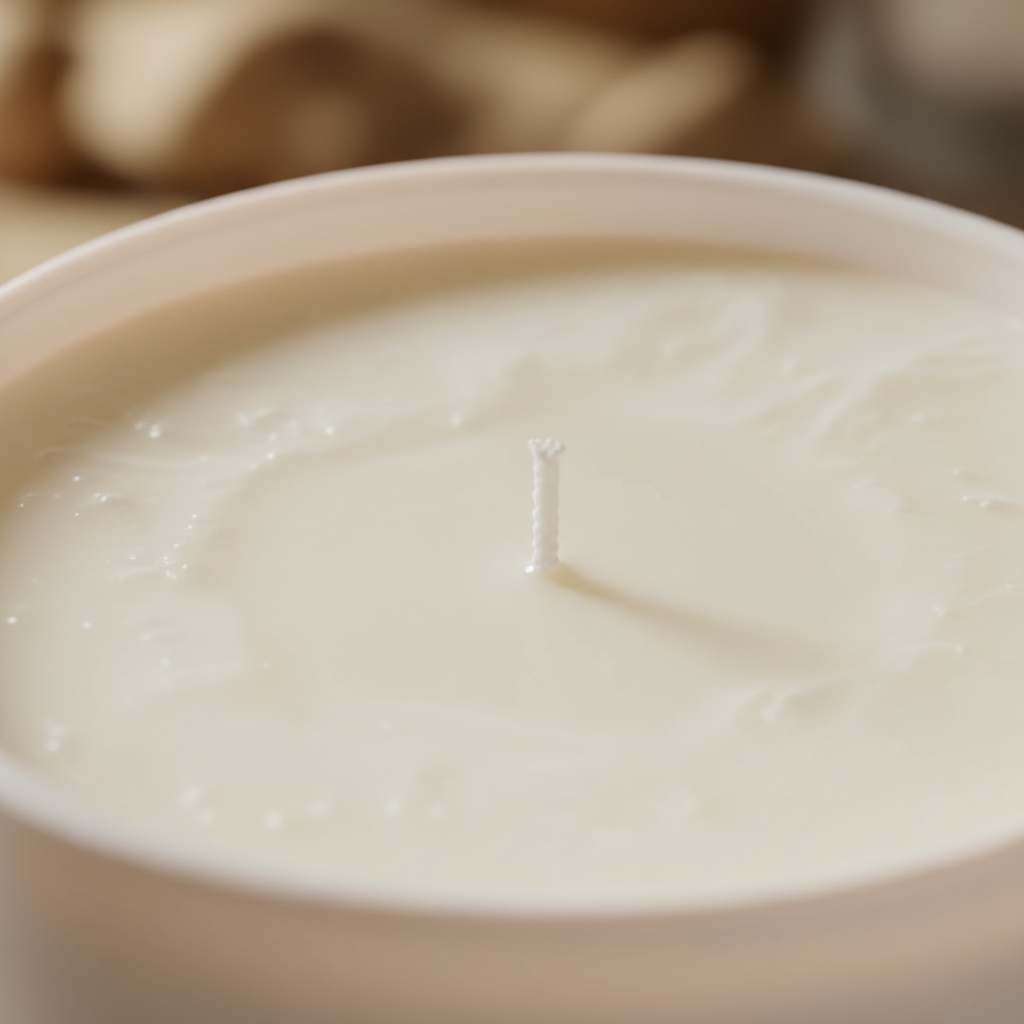
Why soy–coconut–apricot wax matters
This blend matters because it solves common candle issues—tunneling, weak scent, and sooty jars. Its balanced melt point and viscosity support full-edge pools, consistent hot throw, and visibly cleaner glass, so more of your 14 oz candle is enjoyed instead of left behind.
If you’ve ever trimmed a wick, followed directions, and still seen a wonky burn, you’ve felt the limits of single-wax formulas. The soy–coconut–apricot synergy smooths those edges. You get a stable melt pool, reliable diffusion, and a calmer, steadier flame that’s easier to manage session after session.
- Cleaner-looking jars: With a correctly sized wick, visible soot deposits are reduced compared to many blends with higher paraffin content.
- Even consumption: Full-diameter melt pools reduce leftover rings by the jar wall, which is a common source of waste.
- Consistent hot throw: The coconut component supports fragrance release so rooms in the 120–250 sq ft range reach a pleasant background level in 45–90 minutes.
- Smoother tops: Apricot lends a creamy finish and helps reduce surface irregularities after cooling.
In our experience testing seasonal collections—like First Rain and Summer Breeze—we target a predictable 2–3 hour first burn to condition the candle “memory.” That single habit sets the stage for edge-to-edge melts and a steady scent profile across the life of the candle.
Want the quick science-backed summary and maintenance checklist? We’ve condensed the essentials in our clean-burning wax blend guide.
How the blend works (clean burn, even melt, strong throw)
The blend balances melt point and oil-binding so fragrance disperses efficiently without overheating. Soy adds structure, coconut enhances diffusion, and apricot improves surface finish. Together, they support 1/4–3/8 inch melt pools and steady flames at typical room temperatures.
Clean-burning happens when three factors align: wax composition, wick sizing, and burn environment. The soy–coconut–apricot matrix holds fragrance oil while releasing it at a controlled rate. That’s why you’ll often notice stronger hot throw within the first 60–90 minutes once the melt pool forms uniformly.
- Melt behavior: Balanced viscosity encourages the melt pool to reach the vessel edge, usually within 2–4 hours depending on diameter.
- Diffusion window: Once the pool is established, diffusion stays steadier, avoiding steep peaks and drops.
- Surface recovery: On cool-down, apricot supports smoother tops, reducing “craters” that can disturb next-burn wicking.
Room conditions matter. Drafts and AC vents can tilt a flame by a few degrees, overheat one side, and cause lopsided melts. Place candles 2–3 feet from strong airflow and 8–12 inches from walls or vertical decor to normalize convection around the jar.
New to wick care or want a refresher? Our step-by-step habits below are quick and impactful—and they make any premium blend perform like it should.
Comparison: coconut–apricot–soy vs. soy, paraffin, and beeswax
Compared with soy-only, paraffin, and beeswax, a soy–coconut–apricot blend offers a strong balance: cleaner-looking burns than many paraffin-heavy options, smoother tops than soy-only, and often stronger hot throw than beeswax in container candles of similar size.
| Wax Type | Clean Burn (Jar Soot) | Scent Throw (Hot) | Surface/Tops | Melt Pool Consistency | Notes |
|---|---|---|---|---|---|
| Soy–Coconut–Apricot (blend) | Low with proper wick | Strong, steady | Very smooth | Even, edge-to-edge | Balanced profile for modern container candles |
| Soy-only | Low | Moderate | Can frost | May tunnel if under-burned | Popular, but can need longer first burns |
| Paraffin | Varies | Very strong | Smooth | Consistent | Petroleum-derived; performance depends on formula |
| Beeswax | Low | Mild–moderate | Natural texture | Slow, steady | Excellent for ambiance; softer fragrance projection |
If you’re comparing options, our deeper breakdown of clean-burning best practices pairs well with this table: see burn cleaner and waste less.
Best practices: cleaner burn, stronger scent, longer life
Trim the wick to 1/4 inch before every light, let the first burn reach a full melt (2–4 hours), and keep jars 2–3 feet from drafts. These three steps prevent tunneling, maintain a steady flame, and maximize hot throw in rooms up to roughly 250 sq ft.
Daily-use habits that pay off
- Wick at 1/4 inch (6 mm): Shorter wicks reduce mushrooming and help stabilize flame height around 1/2–3/4 inch.
- First burn sets memory: Plan 2–3 hours for smaller jars and 3–4 for wide jars so the pool reaches the wall.
- Rotate the jar 90° between sessions: Helps average out small room drafts and maintain uniform walls.
- Relight smart: If the top is uneven, let it sit for 30–60 minutes to fully harden before trimming and relighting.
Placement and safety tips
- Distance from airflow: Keep 24–36 inches from vents, fans, or windows to avoid flame lean.
- Heat-safe, level surface: A flat surface prevents hot spots and slanting melt pools.
- Session timing: For routine evenings, 2–3 hours gives you fragrance without overcooking the top layer.
Wax melts vs candles: when each shines
Use wax melts when you want flameless fragrance for 2–4 hour blocks in smaller rooms. Use candles when you want both ambiance and scent. If you’re new to melts, our practical wax melts guide for beginners walks you through warmers, segment sizing, and scent cycling.
Tools and resources that make a difference
Small tools drive big results: a wick trimmer, snuffer, and dependable matches improve flame control and jar clarity. Pair them with flameless options like wax melts and car diffusers to scent every zone of your day without overburning a single jar.
We designed our Custom Ceramic Matchbox to be both beautiful and practical. Solid strikes and consistent sparks mean your wick ignites cleanly, so you’re not blasting the tip and creating excess carbon. It’s also personalizable—great for gifting or marking special dates.
- At-home essentials: trimmer, snuffer, heat-safe coaster, and your go-to lighter or matchbox.
- Flameless coverage: coordinate wax melts in work nooks and a car diffuser for commutes to avoid overusing a single candle.
- Gift-ready sets: pair an 8 oz candle with a handmade soap for guest bathrooms or housewarmings.
Want pairing ideas for cozy nights and weekend resets? Explore our candle and wax melt pairing ideas to create layered scent zones room by room.
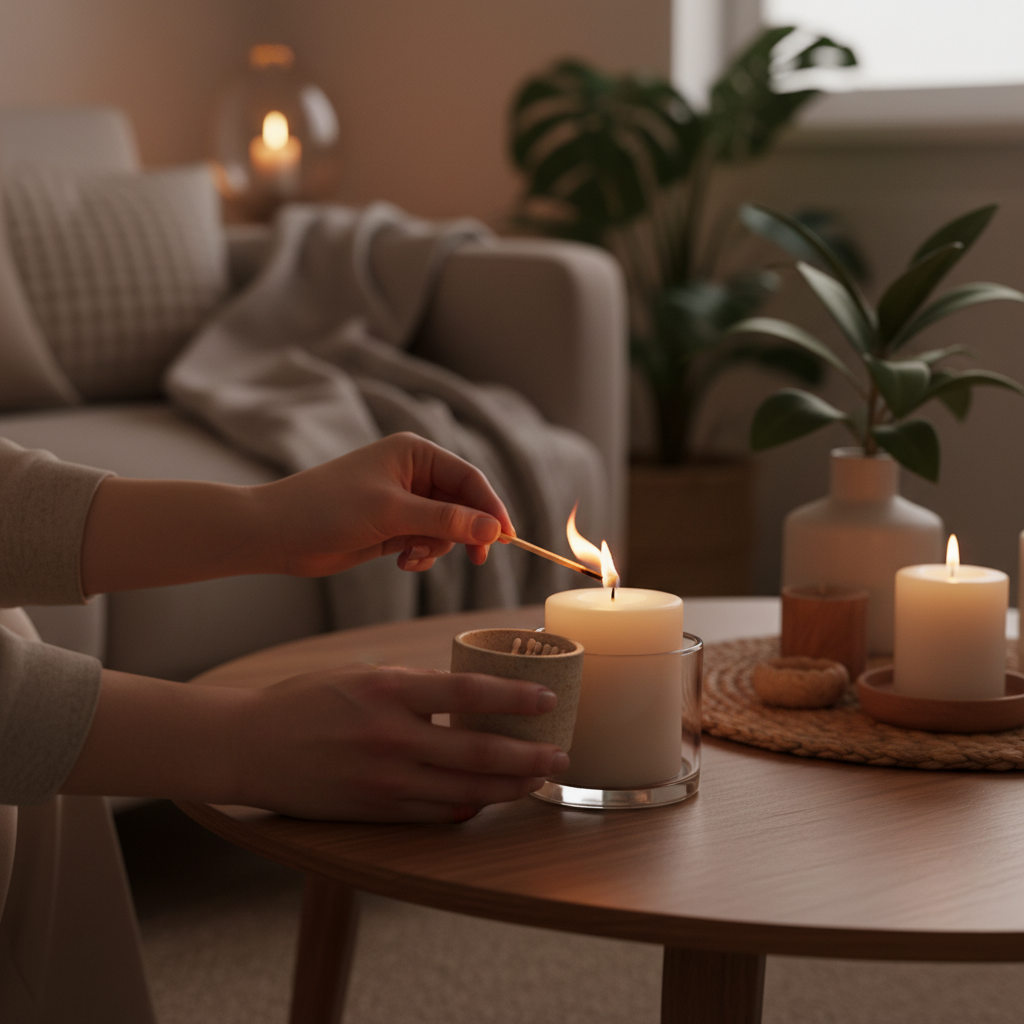
How to get consistent results at home (step-by-step)
Follow a repeatable routine: trim to 1/4 inch, burn 2–3 hours to set memory, keep 24–36 inches from drafts, and rotate the jar between sessions. This simple flow yields even melt pools and reliable hot throw across the candle’s lifespan.
- Prep the wick: Trim to 1/4 inch (6 mm). Remove loose carbon to avoid instant mushrooming.
- Choose the spot: Level, heat-safe surface; keep 2–3 feet from vents and open windows.
- Light cleanly: One consistent strike (our Ceramic Matchbox shines here). Avoid torching the tip.
- Let the pool form: Aim for a 1/4–3/8 inch melt depth; for wide jars, this may take 3–4 hours.
- Extinguish without smoke: Use a snuffer, not a blow, to minimize soot drifting onto the rim.
- Cool and reset: Allow 60 minutes to harden; then trim for the next session.
Repeat this habit loop and you’ll see steadier flames, fewer wick mushrooms, and clearer glass—signs your wax and wick are working in sync.
Mini case studies: real-world scenarios with The Artisan Nook
In small rooms (120–150 sq ft), a single 14 oz soy–coconut–apricot candle typically reaches background-level scent in about an hour. In larger, open layouts, layer one candle with wax melts to keep coverage steady without overburning any single jar.
Evening reset in a compact living room
Room size: ~150 sq ft. Steps: place the candle 30 inches from the nearest vent, trim wick to 1/4 inch, burn for 2.5 hours. Result: edge-to-edge melt by hour two, steady hot throw, glass remains clear by visual check.
Guest bathroom welcome
Use an 8 oz candle for 60–90 minutes before guests arrive, then switch to coordinating wax melts during the visit for flameless continuity. Our handmade soap bundle complements this setup and prevents scent fatigue.
Open-concept kitchen + dining
Layer one 14 oz candle near the dining zone and use wax melts in the kitchen nook. Alternate burn sessions: 2–3 hours candle, then 2 hours melts. This cycling reduces thermal stress on any one jar while keeping aroma consistent.
Curious which fragrance families fit your home style? Our seasonal profiles—like the Tropical Forest scent—share notes, strengths, and placement ideas.
Value and longevity (what to evaluate—no prices)
Evaluate value by burn quality and scent performance, not just jar size. A properly wicked soy–coconut–apricot candle with full-edge melts uses more of its wax, reduces waste rings, and maintains hot throw across many sessions—delivering more enjoyable hours per jar.
- Burn efficiency: Edge-to-edge melts reduce leftover wax; check the wall line after each session.
- Session planning: Right-sizing burn windows (2–4 hours) prevents overheating the top layer, preserving fragrance longevity.
- Tool habits: Regular trimming and clean extinguishing translate to clearer glass and steadier scent for subsequent burns.
Shopping online? Focus on formulation details, fragrance families, and care guidance from the maker. Shopify’s overview of candle sellers highlights how clear product descriptions and consistent branding improve the buying experience—use those cues to compare options responsibly.
Serving Irving, TX—Broadmoor Hills and nearby Dallas County
Homes in Broadmoor Hills and greater Dallas County benefit from wax blends that stay stable in AC-heavy months. The soy–coconut–apricot profile we use maintains even melts and steady scent when placed 24–36 inches from vents in typical living rooms and bedrooms.
Our studio is based at 4943 Dominion Blvd, Irving, TX 75038. If you’re scenting an apartment near Dorris Park or a single-family home closer to W.O. Harrington Park, this blend adapts well to shifting indoor temperatures and airflow from spring through late fall.
Local considerations for Broadmoor Hills
- Summer AC cycles can push drafts; keep jars about 2–3 feet from vents and rotate 90° between sessions.
- Peak allergy seasons (spring/fall) favor lighter, nature-inspired profiles for daily use—switch to deeper notes in shorter, evening burns.
- Weekend hosting? Stage a candle in the living zone and wax melts in hallways to maintain consistent scent while doors open/close.
Helpful research and buyer cues
Rely on transparent maker notes, burn-care instructions, and fragrance families when evaluating premium candles. Established eCommerce guides emphasize detailed product pages, consistent scent naming, and clear care tips as signals of quality and accountability.
For shoppers comparing brands online, general retail guides like Shopify’s candle primers explain how reliable product details and cohesive collections improve buying confidence. For general fragrance education, see this signature scent guide to better align room size, intensity, and mood.
And if you’re curious about how blends influence clean-burning behavior beyond our site, our in-depth comparison unpacks performance trade-offs with practical, at-home steps.
FAQ: soy–coconut–apricot wax and clean-burning care
Get quick, direct answers to common questions about soy–coconut–apricot wax, scent throw, wick care, and when to choose wax melts vs candles. Each answer is designed for fast scanning and voice responses.
What makes soy–coconut–apricot wax burn more evenly?
The blend balances melt point and viscosity, so the pool reaches the jar edge more reliably. With a 1/4-inch trimmed wick and 2–4 hour sessions, you’ll see fewer tunnels and smoother surfaces between burns.
How do I get stronger scent without overburning?
Let the melt pool form (usually within 60–90 minutes), keep the jar 2–3 feet from drafts, and trim the wick to 1/4 inch before each light. For larger spaces, layer with wax melts so you don’t overheat a single jar.
Is this blend better than soy-only for container candles?
Many users prefer the blend’s smoother tops and steadier hot throw. Soy-only can perform well, but may require longer first burns and tighter wick care to prevent tunneling, especially in wider vessels.
When should I use wax melts instead of candles?
Use melts for flameless, steady fragrance in work nooks, entryways, or during gatherings. They’re ideal for 2–4 hour blocks. Use candles when you also want ambient light and a focal point for relaxation rituals.
Do I need special tools to maintain a clean burn?
Not many. A wick trimmer, a snuffer, and dependable matches go a long way. Our Custom Ceramic Matchbox provides solid strikes that help light the wick cleanly without scorching the tip.
Conclusion and key takeaways
Choose soy–coconut–apricot wax when you want a cleaner-looking jar, strong consistent scent, and smooth, edge-to-edge melts. Pair smart wick care with stable placement and you’ll unlock the blend’s full potential in everyday rooms.
- The blend’s balance supports 1/4–3/8 inch melt pools and steady hot throw in typical rooms.
- Trim to 1/4 inch, burn 2–4 hours, and keep 24–36 inches from drafts for consistent results.
- Layer candles with wax melts or a car diffuser to scent multiple zones without overburning one jar.
- For deeper comparisons and tips, see our blend comparison and wax melts guide.
Ready to explore nature-inspired, handcrafted options? Browse our collections by fragrance family, build a gift-ready bundle, or personalize a Custom Ceramic Matchbox to make a moment truly yours.
Soft CTA: Have questions about scent fit for your space? Send us a note through our site. We love recommending a candle + melt combo tailored to your room size and routine.
Final step: If you’re in Irving, book a quick virtual consult and we’ll help you match fragrances to your rooms—and suggest a wick-care routine that fits your evenings.